Politics
Working Across Borders, Great Lakes Leaders Plan for Region’s Future
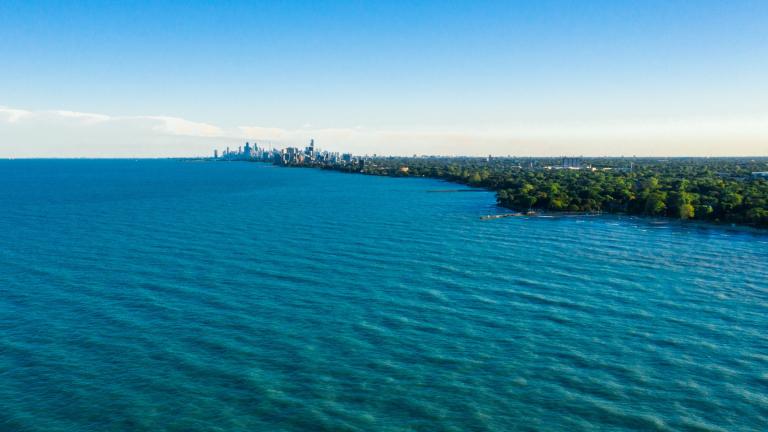
The Great Lakes provide water to hundreds of cities and tribal nations, from Chicago to Duluth to Toronto.
Despite the distance, local leaders across the region are realizing they have a lot in common. Now, these leaders are joining together to advocate for their shared needs and to protect the shared resources of the lakes.
The Great Lakes and St. Lawrence Cities Initiative (GLSCI) is a multinational coalition of municipal leaders dedicated to supporting the region. Since its founding by former Chicago Mayor Richard M. Daley in 2003, its membership has expanded to more than 425 mayors and other municipal leaders.
The Great Lakes hold more than 80% of North America’s surface freshwater and provide drinking water to more than 30 million people.
Mayors from the coalition traveled to Washington, D.C., earlier in March to advocate for policies they say will benefit the region.
Sam Cunningham, the mayor of Waukegan, said he was inspired by the bipartisan interest he saw in Great Lakes management.
“There was a sense of understanding that this fresh, essential water is a need that all Americans have,” Cunningham said. He went on to say that lawmakers he talked with seemed surprised by the passion of the coalition.
One of the coalition’s priorities is the renewal of the Clean Water State Revolving Fund, which provides financing for clean water projects like replacing lead service lines.
Lead service line replacement is lagging behind schedule in Chicago, with only 4% of lines having been replaced by fall 2025. According to Randy Conner, commissioner of Chicago’s Department of Water Management, Illinois is only receiving about 5% of the normal amount of federal funding for replacing lead service lines.
“The Great Lakes not only deliver water for our cities, but they contribute to work, to jobs, the economy,” Conner said. “If you take the Great Lakes and shut the water off for 24 hours, it would be devastating.”
Conner said that investments in clean water infrastructure will benefit everyone who draws from the Great Lakes.
The city of Chicago has “great partners, even with people outside the basin itself,” Conner said. “What we’ve tried to do is make sure that we are giving water and providing water to everybody who needs it.”
Construction began last year on a pipeline that will carry Lake Michigan water from Chicago to Joliet, where residents are facing a regional water crisis.
Stewardship of the Great Lakes is essential as climate change and economic conditions reshape where people live and work, according to Jon Altenberg, the president and CEO of GLSCI.
“If you don’t have access to fresh water, and the energy needed to keep factories cool, you’re going to move into this region,” Altenberg said. “We know this is going to happen over the next 10 years.”
In 2025, GLSCI released an economic development plan for the region, including a plan to build what the initiative is calling a “Fresh Coast Economic Corridor.”
The plan, which was endorsed by Chicago Mayor Brandon Johnson, sets goals of bringing 18 million jobs to the Great Lakes region while cutting carbon emissions and improving water quality by 2035.
The economy on both sides of the U.S.-Canada border is integrated, according to Altenberg. As one example, he brought up a bus manufacturer that sends components across the border more than 20 times in the course of building a bus.
Nearly $20 billion of goods are exported from Illinois to Canada every year, according to Altenberg.
Altenberg also said that environmental protection goes hand in hand with economic opportunity, referencing the 1969 Cuyahoga River fire that contributed to turning a previous regional boom into a bust.
For Cunningham, the lesson he’s bringing back to Waukegan is that Congress is listening when it comes to protecting the Great Lakes.
“We need to keep our voice strong, unified, and collaborative, and understand that if we take our messaging and give it to the right people throughout D.C., they will then make the funding efforts that are needed so this region can continue to prosper,” said Cunningham.